The code rules that shape a Newhall kitchen
Most of a kitchen remodel is taste. A handful of it is code, and those items are cheaper to get right on paper than to correct after an inspector sees them. This page covers the three that come up most in Newhall: permits, the range hood and the faucet.
Each rule below links to the agency that publishes it. Codes get amended, so treat this page as a starting point and confirm the current text before a decision depends on it. Once the scope is settled, getting the Newhall kitchen remodel quoted is the next step.
Permits: what Santa Clarita exempts, and what it does not
Finishes no, trades yes
The finishes are exempt. The trades behind them are not. Newhall kitchens are permitted by the City of Santa Clarita. The city's amended building code lists work that needs no building permit, and two items on that list matter in a kitchen:
- Counters and countertops, grouped with other interior finish work such as painting, tiling and flooring.
- Cabinets and shelving no taller than 8 feet, in a single family house.
The catch sits at the top of the same list. The code says that unless something else exempts them, separate plumbing, electrical and mechanical permits are required for the items it has just exempted. The full list is in Santa Clarita's municipal building code.
| Work | Building permit | Trade permit |
|---|---|---|
| Replace countertops, same sink location | Exempt | Usually none, unless plumbing is altered |
| Replace cabinets up to 8 feet tall | Exempt | Needed if wiring or plumbing changes with them |
| Add circuits or move outlets | Not the question | Electrical |
| Move the sink or dishwasher | Not the question | Plumbing |
| Install a new vented range hood | Not the question | Mechanical, often electrical |
| Remove or open a wall | Required | Often several |
The table is a plain reading of the exemption list, not a ruling. Santa Clarita Building and Safety makes the call on any specific job.
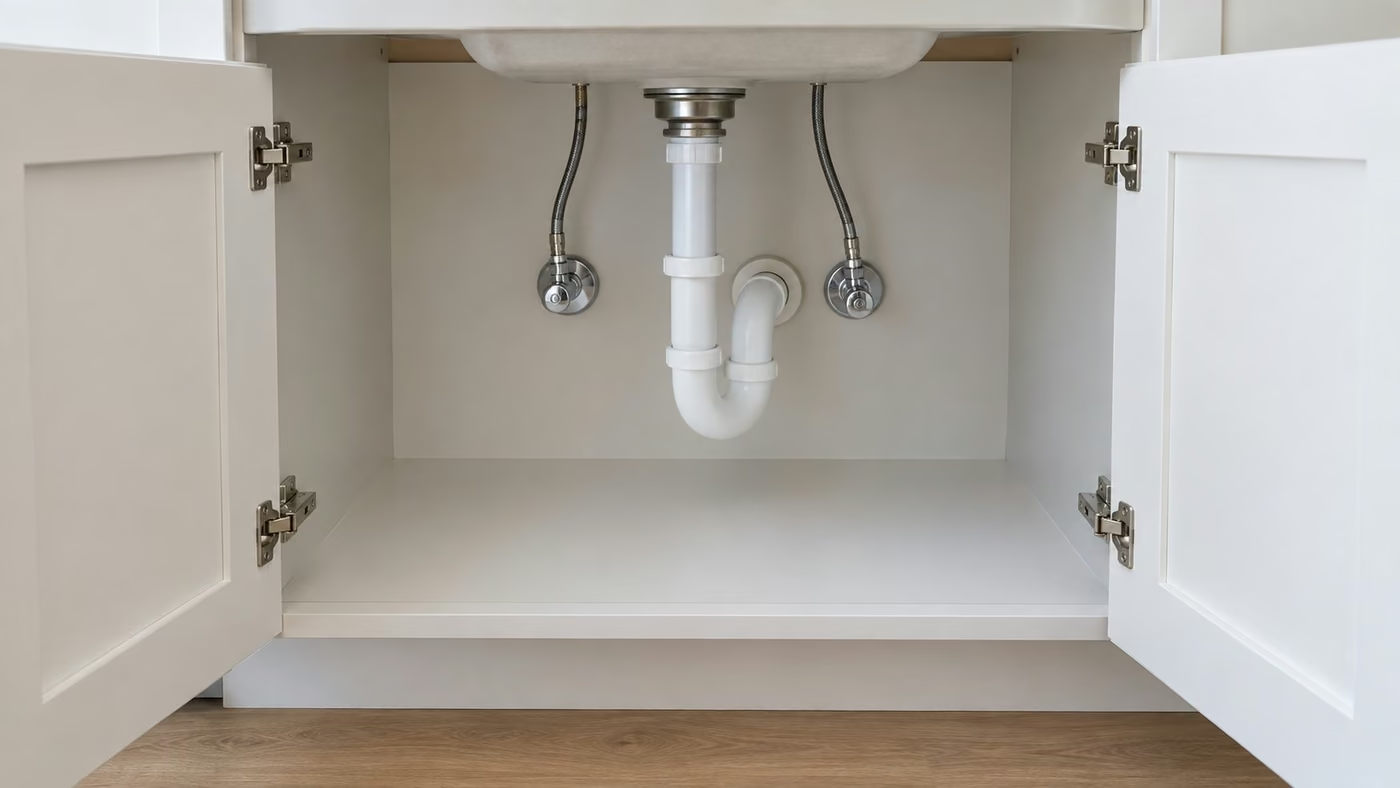
Range hoods: the sound rating
3.0 sone limit
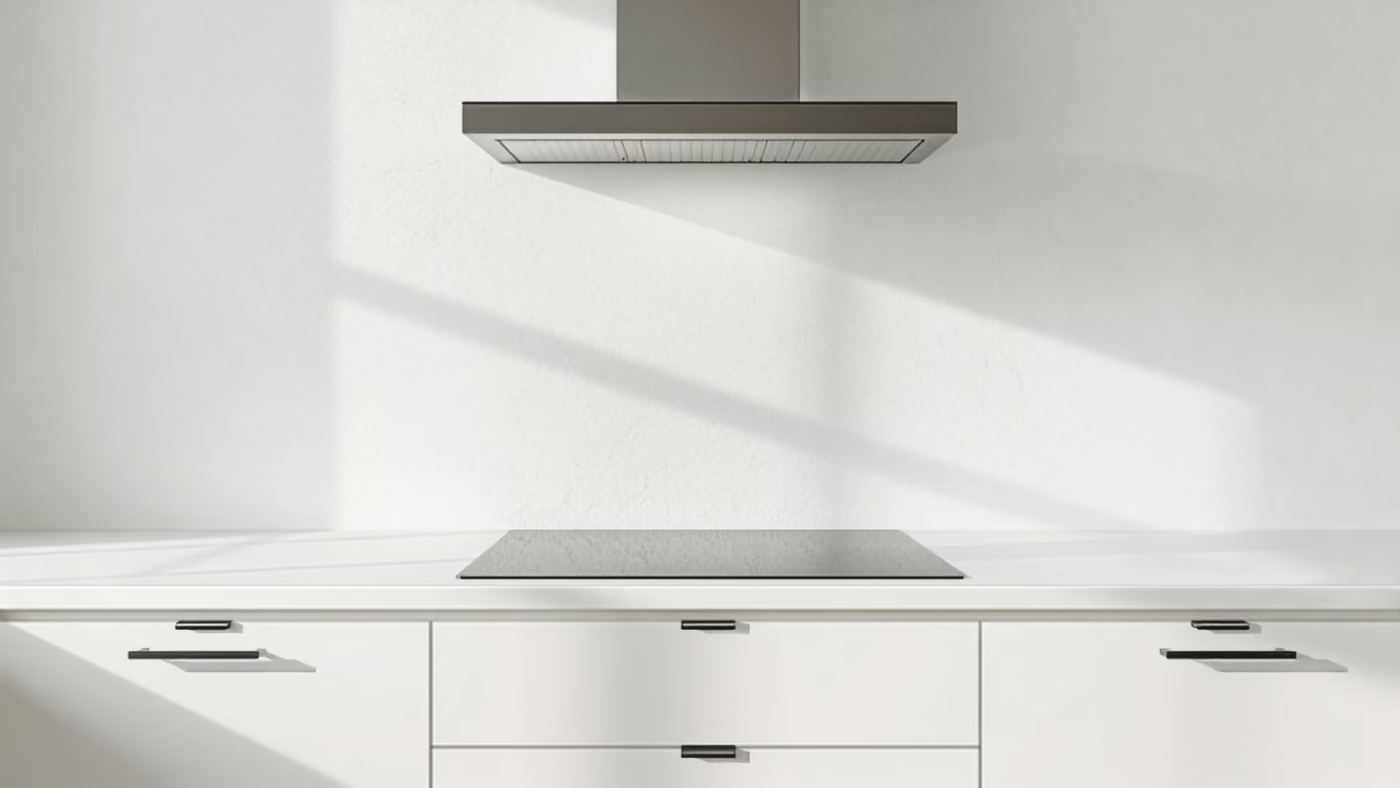
Choose a hood that is rated quiet at a real working speed. California's energy code sets a sound limit for kitchen exhaust fans: a maximum of 3.0 sones at one or more airflow settings of at least 100 cubic feet per minute. Hoods whose lowest setting is above 400 cubic feet per minute are exempt from that noise requirement. Both points appear in the Energy Commission's residential compliance manual, which also describes the airflow or capture efficiency a vented hood has to meet.
Whether a particular remodel is required to meet that ventilation section depends on the scope, and the plan check settles it. The practical advice holds either way. Look for a hood that is certified for both airflow and sound, vented to the outside rather than recirculating, and sized to the range you are actually installing.
Faucets: the flow limit
1.8 gpm cap
Any new kitchen faucet sold in California is already limited. The state's appliance efficiency rules cap kitchen faucets and aerators at 1.8 gallons per minute, with an optional temporary flow of 2.2 gallons per minute, measured at 60 psi. The limit is set out in the state's appliance efficiency regulations.
That temporary higher flow is the useful part. Many kitchen faucets offer a boost button for filling a pot, then return to the lower rate on their own. If filling large pots quickly matters to you, look for that feature rather than an older faucet from a garage sale.
SourceCalifornia Title 20
Two more items inspectors look at
Outlets and connections
Countertop outlets
Kitchen counters need properly placed, protected outlets, and new counters or a new layout usually mean the electrician revisits them. Plan outlet locations with the backsplash so nobody is cutting new tile later. In an older Newhall house, that visit often finds circuits that need catching up.
The dishwasher and disposal
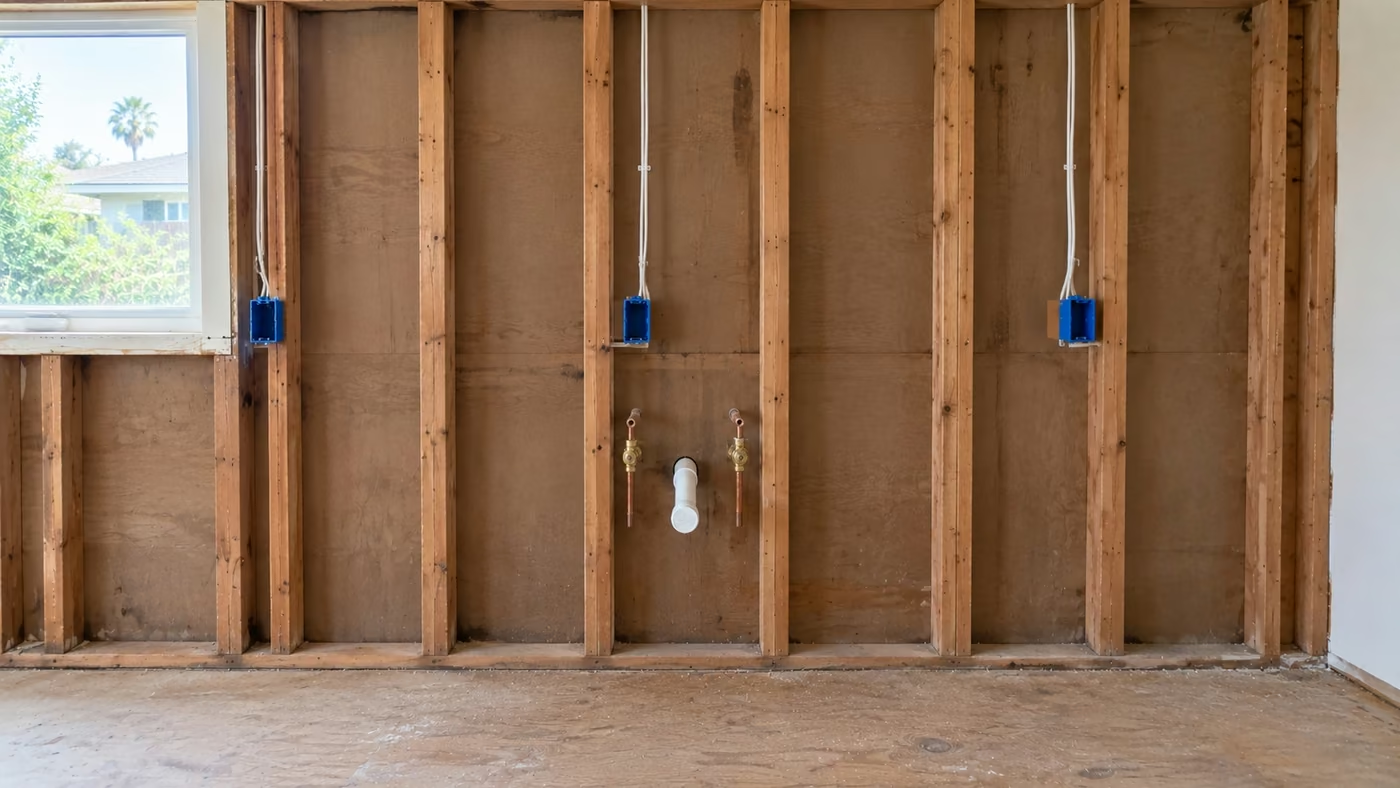
Both sit on plumbing and electrical connections that an inspector can check. If either moves, the connections move with them, and that is permitted work.
Code questions
- Do I need a permit to replace countertops in Newhall?
- Not a building permit. Santa Clarita's code exempts counters and countertops, but plumbing or electrical work that comes with the new counters still needs its own permit.
- How quiet does a range hood have to be in California?
- The energy code sets a maximum of 3.0 sones at one or more settings of at least 100 cubic feet per minute. Hoods with a lowest setting above 400 cubic feet per minute are exempt from that noise limit.
- What is the maximum flow for a kitchen faucet in California?
- 1.8 gallons per minute, with an optional temporary flow of 2.2 gallons per minute, measured at 60 psi, under the state's appliance efficiency rules.
- Who decides whether my kitchen job needs a permit?
- Santa Clarita Building and Safety. The contractor who takes the job should tell you which permits they plan to pull and include them in the written quote.